

OpenAI and Anthropic have been going head to head lately: new models, new features, and their own ways of handling subscriptions. I've subscribed to Claude Pro, ChatGPT Plus, and Google's AI Pro student offer, so I wanted to compare what I actually get out of them.
This is mainly a comparison of Claude and ChatGPT. At the time of writing, the information I had suggested that even Google's Ultra subscribers still couldn't use Gemini 4, roughly two weeks after its announcement. A model I can't actually access isn't much help with today's work, so my Google comments below focus on what I could use.
These are my own impressions, with the quota observations covering October 2–12, 2026. They are not fixed limits or a controlled benchmark. Tasks, models, reasoning settings, account offers, and product changes can all affect the experience.
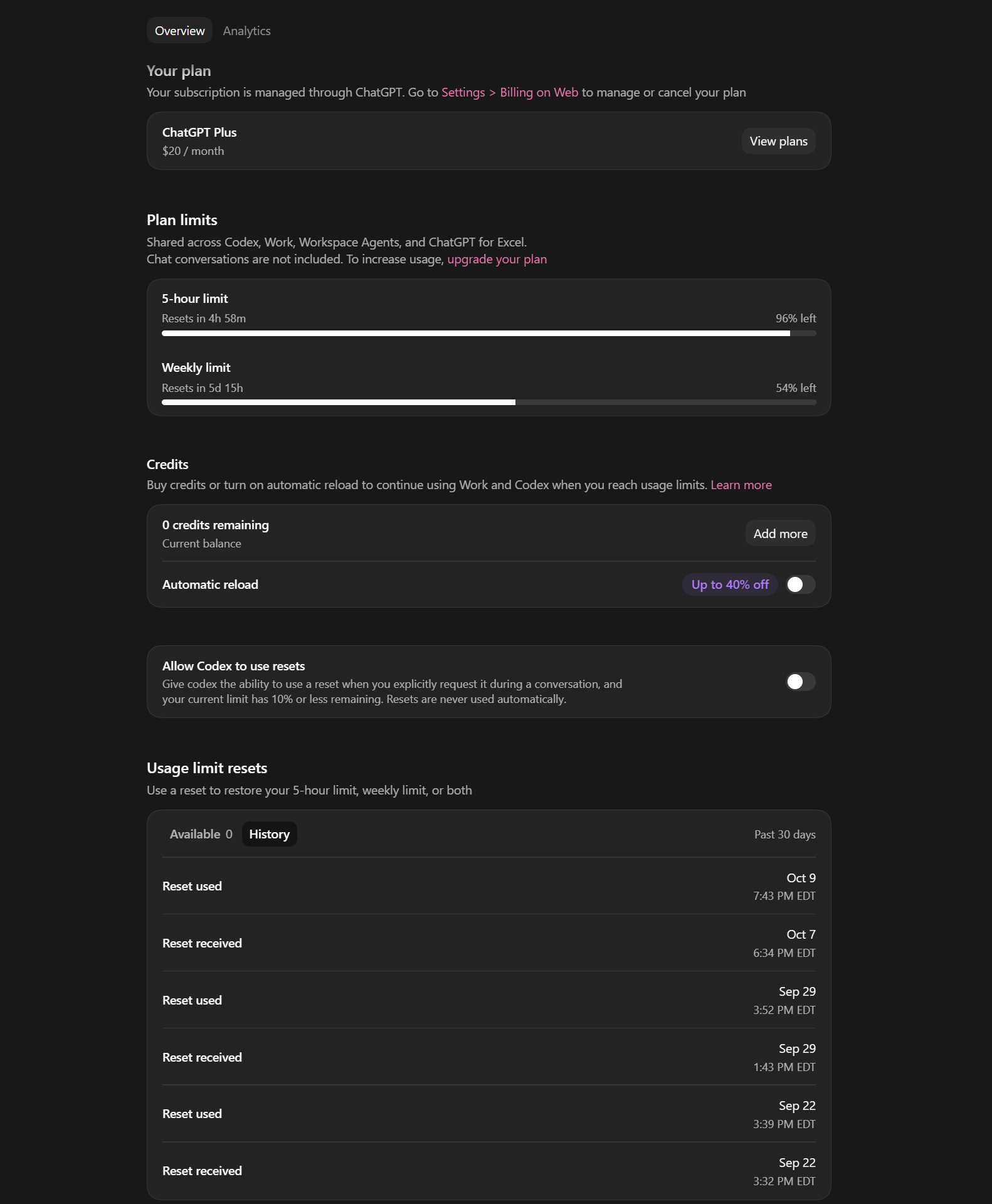
ChatGPT Plus: everyday use lasts longer than Codex work
Neither company's allowance is especially easy to predict from the outside. I can describe how long mine lasted while running real tasks, but I can't promise the same result for another account or a future version of the plan.
My main model is GPT-6.1 Sol, usually at High reasoning effort and occasionally Extra High. Around an hour of work is often enough to exhaust my five-hour Codex allowance. My tasks generally aren't unusually token-heavy, either. Browser control, working inside applications such as Blender, or starting subagents can burn through that allowance much faster — sometimes in about twenty minutes.
Over October 2–12, I found that using up roughly six five-hour allowances was enough to reach my weekly limit. That's my observed pattern, rather than an official conversion formula.
The frequent resets have helped. There was Tibo's promise, as I understood it, of a useful Codex feature every day for 28 days, with a reset if that streak was broken. Recently there have also been several automatic resets. Once, I used a reset, exhausted the first five-hour allowance, and then another automatic reset arrived. My timing couldn't have been worse!
I also received resets I could redeem when needed on September 22, September 29, and October 7. These were offers on my account; I wouldn't treat them as a benefit guaranteed every month.
What about Astra?
Before 6.1 arrived, I used Astra. In my experience it consumed allowance around four or five times as quickly as Sol, without feeling dramatically smarter on my tasks. Maybe I simply wasn't giving it problems difficult enough to show the difference. With intensive Astra use, I could run through my weekly allowance in fifteen or twenty minutes.
Sol has also felt a little slow lately. Astra's speed seemed fine, and Opus 5.5 was quick, but Sol sometimes kept me waiting. That's a subjective impression from this period, rather than a latency test.
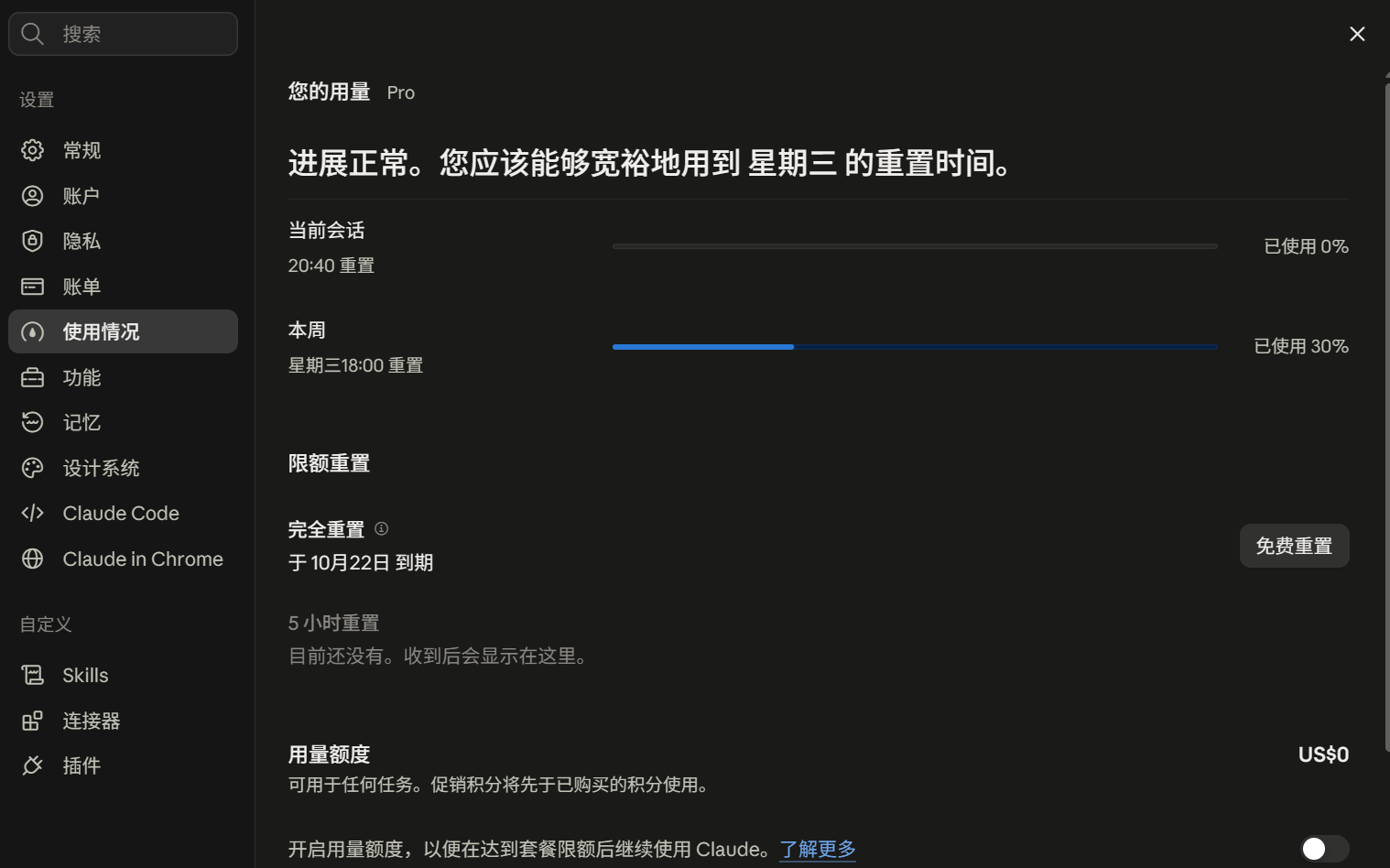
Claude Pro: my pick for coding and creative projects
Most of my usage goes into project development. I also tried the recent trend of using a coding assistant to produce videos — the kind of short, animated explainers popular in Chinese creator communities. For that workflow, Opus 5.5 gave me much better results than ChatGPT. I could produce about four or five videos within a five-hour allowance, which felt very productive.
I'm talking about using the assistant to plan and build the video project, rather than claiming that Opus itself is a dedicated video-generation model.
For coding, I felt Opus 5.5 was noticeably stronger than Sol 6.1 at comparable effort settings. Its allowance consumption seemed slightly lower than Sol's and much lower than Astra's. I usually used Medium, with High for some tasks.
Fable 5.1 wasn't included in the Pro access available to me; using it meant credits or a Max subscription. Check the model choices on your own account before subscribing for one particular model.
Claude hasn't given me nearly as many resets: my account received one. Even so, Opus felt more creative, both when suggesting project ideas and when helping with video production. Sol and Astra were less convincing for those tasks.
There is another practical difference. For ordinary work in ChatGPT's web or mobile app, I almost never used up my allowance; I was comparing those chats with my separate Codex work. Claude's everyday chats and coding work draw from the same allowance, so web conversations also reduce what remains for projects. That matters if you use one subscription for everything.
Google AI Pro: my coding allowance felt too small
Google's offer disappointed me for project work. In the paid Pro setup I tried, Opus 5.5 was available through Antigravity, but the allowance felt tiny. A few exchanges could use it up while I was still planning, or halfway through one stage of the project. I'd like an allowance that at least lets me finish a meaningful piece of work.
On my student offer, I was using Opus 4.6. A few coding exchanges could exhaust the five-hour allowance, and roughly two such sessions used up my weekly allowance. Again, those are observations from my account, not a limit promised for every student plan.
Gemini 3.8 Flash didn't impress me much for coding or code review, either. Its main advantage was speed, but Opus 5.5 was also pretty quick by then.
Which would I choose for $20?
If I could keep only one subscription, I'd choose Claude Pro for frequent coding and project development. For everyday work, studying, and organizing information, I'd choose ChatGPT Plus.
Counting the resets I actually received, ChatGPT lasted longer overall for me. The part I kept running into was the small five-hour Codex allowance. Someone who doesn't receive those offers, or runs a different mix of tasks, may reach a different conclusion.
A few plan details to keep in mind
OpenAI's official pricing documentation says Codex consumption depends on the model and task; some agentic features share that allowance. Separate everyday chat use doesn't mean every feature has its own quota. Anthropic confirms that Claude and Claude Code share limits. Google's model table lists Opus 5.5 for eligible non-trial Pro subscriptions; this is Antigravity access, rather than an Opus model inside the Gemini chat app. None of those rules establishes the exact runtimes I observed above.
Adapted from the original Chinese article, published on October 12, 2026. The first-person observations and recommendations are the original author's.
Comments NOTHING