

If you use AI chat tools or coding assistants, you may have seen a reasoning effort setting. What changes when you choose Low, Medium or High, and which should you use? Here is a practical way to think about the trade-off.
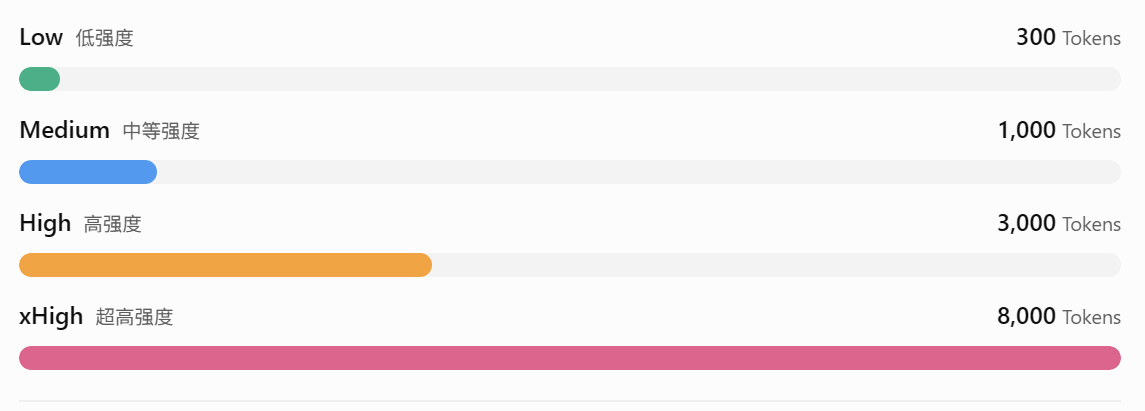
What does reasoning effort change?
Different platforms expose different options: a web app might offer Low, Medium and High, while a coding tool might add Xhigh or Max. Names, defaults and supported levels depend on the model and service; the labels are not a universal scale.
In simple terms, the model works on your request and then produces an answer. Some models can also reason between tool calls. Lower effort generally favors speed and fewer reasoning tokens; higher effort gives the model more room for difficult work. Many models allocate effort adaptively, so neither the time nor the number of tokens is fixed for a given setting. What an interface displays as “thinking” may be a summary rather than the full internal process.
Choosing a level
- Low: A useful starting point for casual conversation, straightforward questions, rewrites and other routine work. Responses are often quicker and cheaper, but difficult problems may need more effort.
- Medium: A balance for learning, coding and tasks that require several steps or some judgment. It can take longer while the model considers the request.
- High: Worth trying for harder problems, complicated code or choices with more trade-offs. Xhigh or Max, where available, can be useful when testing shows the extra time and cost are worthwhile.
These are starting points, not guarantees. A higher setting can improve results but does not ensure an accurate answer; check important claims against reliable sources. An older model at High might outperform a newer model at Medium on a particular task, but the outcome depends on both models and the test. Compare settings on representative examples rather than assuming a fixed ranking.
Why can higher effort cost more?
More reasoning can generate more tokens before the visible answer. In the OpenAI API, reasoning tokens are billed as output tokens even when their content is not shown; the usage response reports their count. Claude’s documentation likewise says thinking tokens are billed as output, while a displayed thinking summary can be shorter than the billed work.
Input, cached input and output often have different prices, but the ratio depends on the model and provider. Longer conversations can add input cost, and cache behavior, tool calls and output length can also affect the bill. A difficult request may use thousands or tens of thousands of reasoning tokens, but there is no fixed amount for High and it does not necessarily make the visible answer longer. Subscription allowances follow the service’s own rules and are not necessarily billed like an API.
Start with the lowest setting that reliably handles the job, then raise it if needed. For API work, compare the reported usage and results, and set an appropriate output limit; limits that are too low can leave a response incomplete.
Translated from the original Chinese article, published October 26, 2026. Examples and billing details are qualified using provider documentation.
Comments NOTHING